Bing Bees Bing Bees
    #seo #socialmedia #digitalmarketer #usaaccounts #seoservice
    Advanced Search
  • Login
  • Register

  • Night mode
  • © 2026 Bing Bees
    About • Directory • Contact Us • Developers • Privacy Policy • Terms of Use • Refund

    Select Language

  • Arabic
  • Bengali
  • Chinese
  • Croatian
  • Dutch
  • English
  • French
  • German
  • Hebrew
  • Hindi
  • Indonesian
  • Italian
  • Japanese
  • Persian
  • Portuguese
  • Russian
  • Spanish
  • Turkish
  • Urdu

Watch

Watch Reels Movies

Events

Browse Events My events

Blog

Browse articles

Market

Latest Products

Pages

My Pages Liked Pages

More

Forum Explore Popular Posts Games Jobs Offers Fundings
Reels Watch Events Market Blog My Pages See all
Ryan Matthews
User Image
Drag to reposition cover
Ryan Matthews

Ryan Matthews

@ryan_matthews
  • Timeline
  • Groups
  • Likes
  • Friends 1
  • Photos
  • Videos
  • Reels
  • Products
I’m Ryan Matthews, an educator and technology enthusiast with over 20 years of experience in transforming education through innovation. My expertise lies in AI, machine learning, and digital learning ecosystems. I strive to bridge the gap between technology and education by sharing practical insights and research-backed content.
1 Friends
11 posts
https://euroamerican.edu.mt
Male
45 years old
Living in Malta
Located in MSD 9020, Malta
image
image
image
image
image
image
Ryan Matthews
Ryan Matthews
7 d

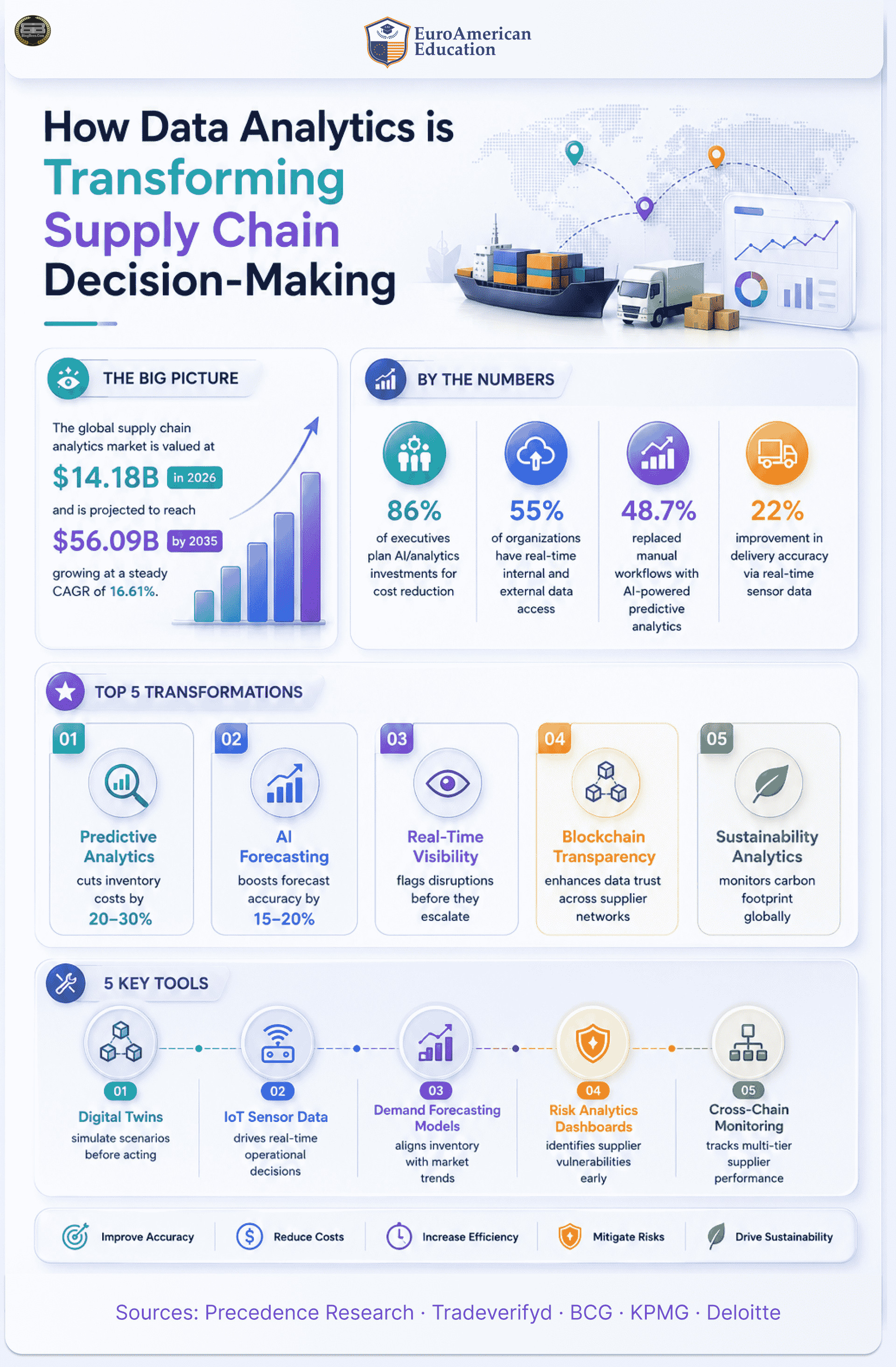
The significance of data can be understood with the fact that it is now the backbone of modern supply chains. Sitting at the value projection of $14.18 billion for the year 2026, the global supply chain analytics market is on a steep growth trajectory and is likely to reach $56.09 billion by 2035 at a CAGR of 16.61%. What does it indicate? Well, it means an explosive growth signaling one clear truth: data-driven decision-making can’t be taken for granted. It is no longer optional. In fact, it is a competitive necessity.


Today, 86% of supply chain executives seem to follow a single direction, and that is to invest in AI and advanced analytics intended to reduce cost burdens. Nearly half of the said percentage have already gone ahead with the decision of replacing manual workflows with AI-powered predictive analytics, while 55% of organizations can easily access both internal and external data in real-time. The results speak for themselves, that predictive analytics matter. It cuts inventory costs by 20–30%. Predictions made by smart intelligent machines powered by AI improves accuracy by 15–20%, and not to forget the contribution of real-time sensor data driving a 22% improvement in delivery accuracy.


In conclusion, the future of supply chain management is intelligence-driven, reshaping it with efficiency, trust and adherence to environmental regulations globally. For more details visit : https://euroamerican.edu.mt/do....ctorate-in-business-
image
Like
Comment
Share
Ryan Matthews
Ryan Matthews
1 w

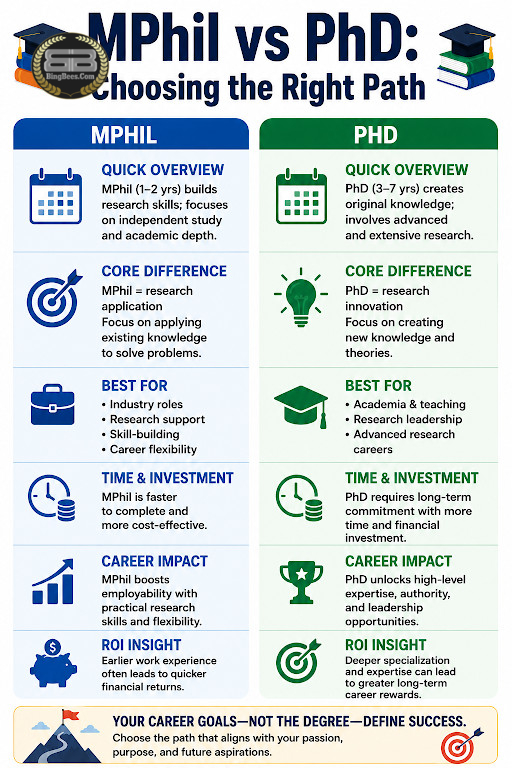
Choosing between an MPhil and a PhD is one of the most consequential academic decisions a researcher can make — and yet, most candidates approach it without fully understanding what separates the two.
On the surface, both are postgraduate research degrees. Beneath that, they serve fundamentally different purposes and reward fundamentally different career ambitions.

An MPhil is built for speed and application. Completed in one to two years, it sharpens your research capabilities and positions you quickly within industry roles, research support functions, and skill-intensive careers where flexibility matters. The return on investment is tangible and early you enter the workforce faster and begin building experience while others are still in the library.
A PhD operates on a different timeline and with a different mandate. Spanning three to seven years, it demands original contribution to human knowledge.

It is not about applying what exists, it is about creating what does not. The reward is authority: deep specialisation, academic credibility, and access to leadership roles in research and higher education that remain closed to any other qualification.

Neither path is superior. The right choice depends entirely on where you intend to take your career and how much time and investment you are willing to commit to getting there.
Your career goals define success not the degree on the wall. For more details visit : https://euroamerican.edu.mt/master-of-philosophy

image
Like
Comment
Share
Ryan Matthews
Ryan Matthews
1 w

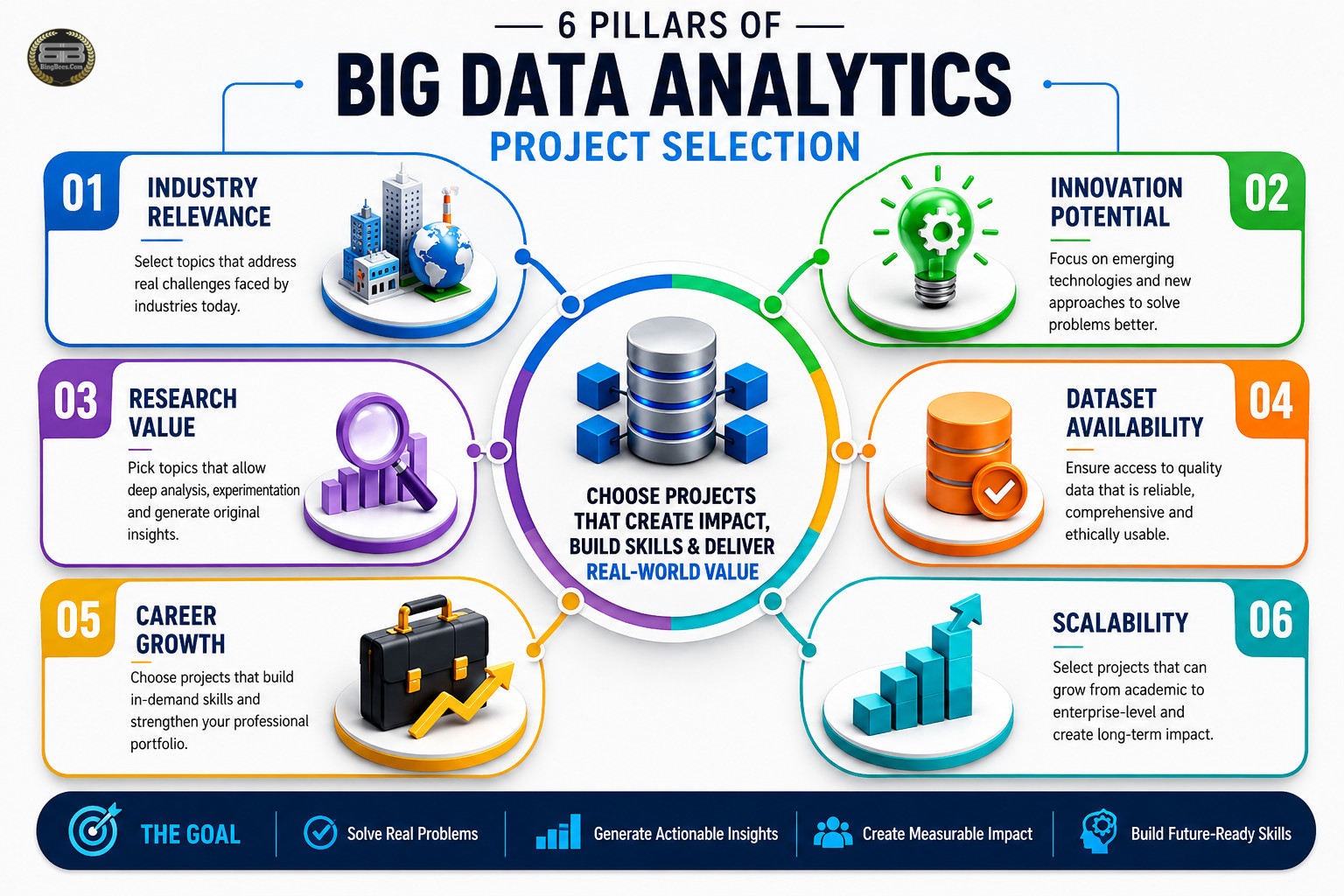
Picking the right Big Data Analytics project is honestly half the battle. This visual breaks down the six things that actually matter when you're choosing where to focus from whether the topic holds real industry relevance to whether the dataset you need even exists. What stands out here is the career growth angle. Too many students chase complexity over practicality, and end up with projects that look impressive on paper but teach them very little. The sweet spot is always the overlap: something that solves a real problem, uses quality data, and builds skills you'll actually use on the job. Scalability and innovation potential sums up the framework nicely because a project that can't grow beyond a classroom exercise has a short shelf life. If you're stuck deciding what to work on, running your idea through these six filters will save you a lot of wasted effort. For more details visit : https://euroamerican.edu.mt/ma....ster-of-computer-sci

image
Like
Comment
Share
Ryan Matthews
Ryan Matthews
2 w

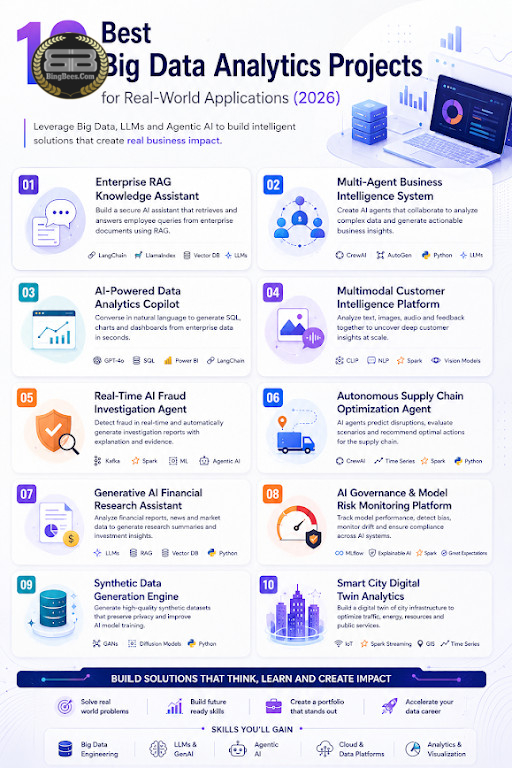
Big Data Analytics has enabled businesses to make better decisions by helping them to extract valuable insights from volumes of data. Thanks to the advancements in Artificial Intelligence, Generative AI and Agentic AI, analytics projects are now not just about reporting, but about intelligent automation, and enabling decision-making in real time. Analytics projects offer real hands-on exposure to problem solving in the real world of business for finance, healthcare, retail, logistics, smart cities and many more.

In this infographic, discover 10 Big Data Analytics projects for 2026, trending across fields such as, Enterprise RAG Knowledge Assistants, Multi Agent Business Intelligence Systems, AI powered Data Analytics Copilots, Multi modal customer intelligence platforms, Fraud investigation agents, Autonomous supply chain optimization systems, Generative AI research assistants, AI Governance & model risk monitoring platforms, Synthetic data generation engines, & Smart City Digital twin analytics
In each project, learners get practical experience with industry-grade tools and technologies including: LLM's, LangChain, CrewAI, Spark, Kafka, Vector Databases, MLflow, Great Expectations, Cloud Analytics Platforms.

The students and professionals will learn the required Big Data Engineering, AI-driven Analytics, Data Governance, ML, Intelligent Automation skills by working on these projects and build a portfolio showing readiness for the future of Data and AI. For more details visit : https://euroamerican.edu.mt/ma....ster-of-computer-sci

image
Like
Comment
Share
Ryan Matthews
Ryan Matthews
4 w

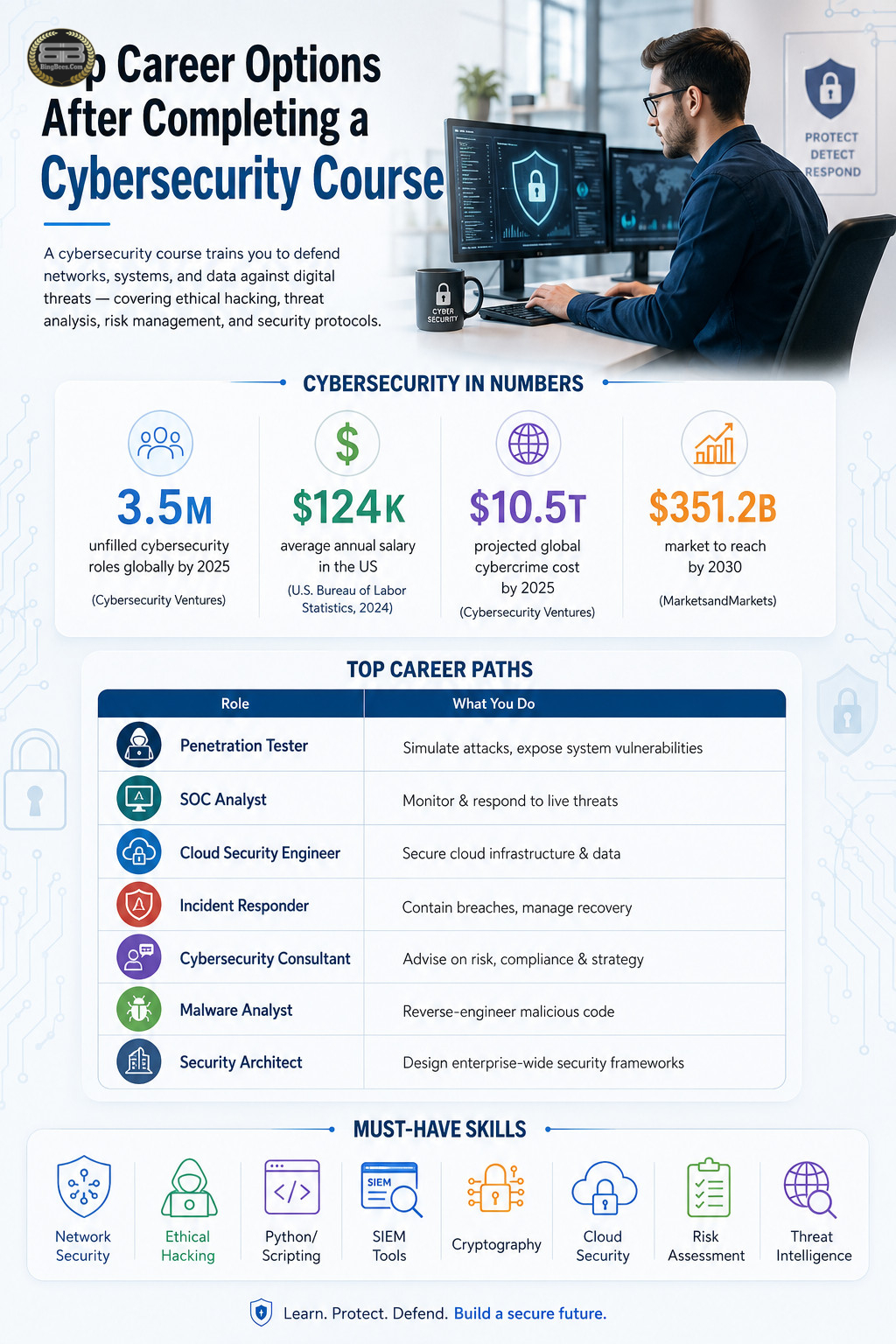
With cybercrime projected to cost the global economy $10.5 trillion annually by 2025, the demand for skilled cybersecurity professionals has never been higher. Yet over 3.5 million positions remain unfilled worldwide — making a cybersecurity course one of the most career-forward investments you can make today.
A cybersecurity course equips learners with practical skills in ethical hacking, network defence, threat analysis, and incident management. Whether you're a tech newcomer or a professional upskilling, the certification opens doors across industries.
Here are the top roles you can pursue:

Penetration Tester — Identifies system weaknesses before attackers can exploit them. SOC Analyst — Monitors security events in real time and responds to active threats. Cloud Security Engineer — Protects cloud-based environments, a rapidly growing need. Incident Responder — Steps in during breaches to contain damage and restore systems. Cybersecurity Consultant — Advises organisations on building resilient security postures. Malware Analyst — Studies and neutralises malicious software. Security Architect — Designs end-to-end security frameworks at an enterprise level.

The average cybersecurity salary in the US sits at $124,000/year (BLS, 2024), with global figures rising steadily. Core skills across all roles include network security, scripting, SIEM platforms, and cloud security knowledge. For more details visit : https://euroamerican.edu.mt/ma....ster-of-computer-sci

image
Like
Comment
Share
Load more posts

Unfriend

Are you sure you want to unfriend?

Report this User

Edit Offer

Add tier


Select an image
Delete your tier
Are you sure you want to delete this tier?

Reviews

In order to sell your content and posts, start by creating a few packages. Monetization

Pay By Wallet

Payment Alert

You are about to purchase the items, do you want to proceed?

Request a Refund