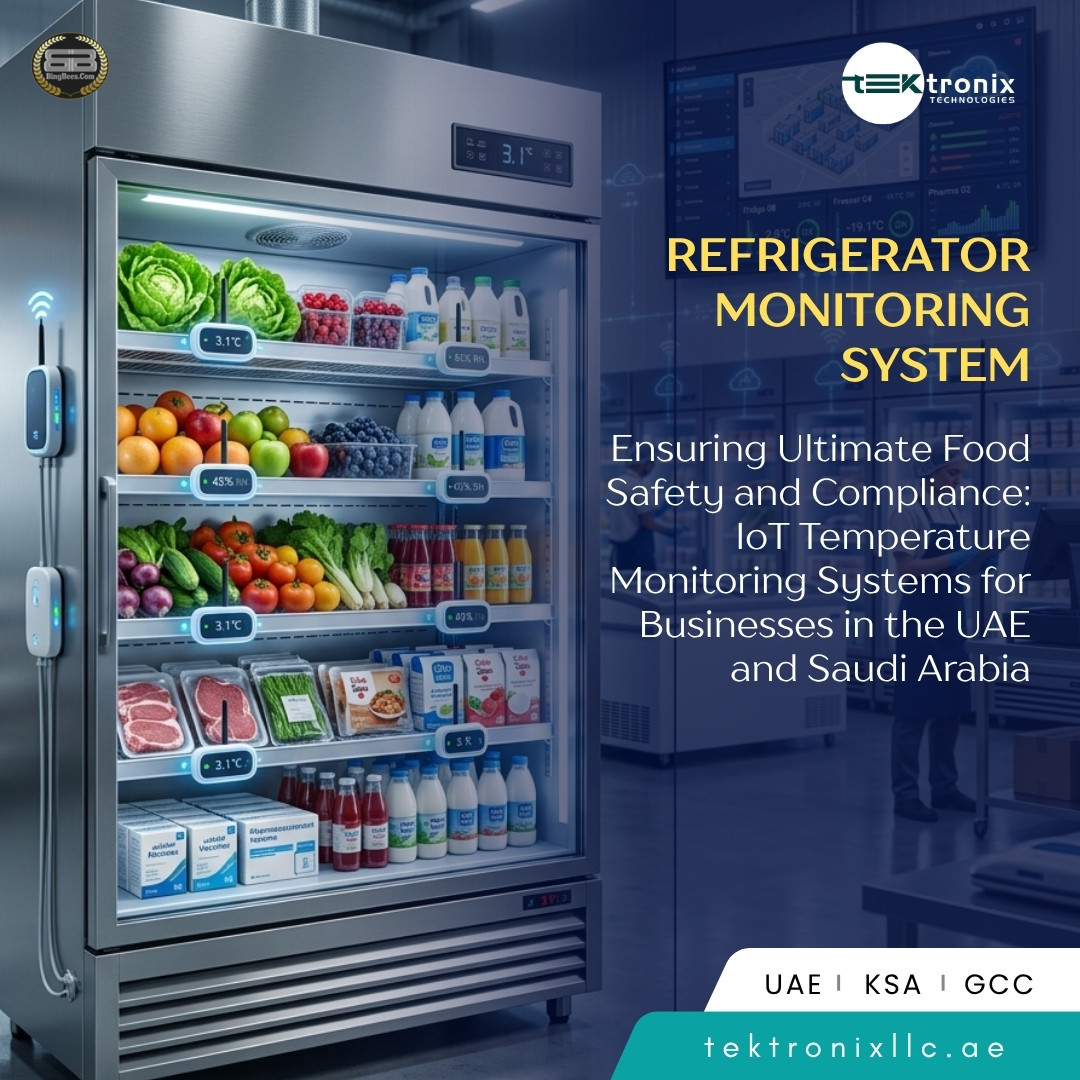

For restaurant operators across Qatar and the GCC, cold-chain integrity is simultaneously a food safety obligation, a regulatory requirement, and a business continuity imperative. The consequences of refrigeration failure — spoiled inventory, regulatory enforcement action, reputational damage, and — most gravely — harm to diners — are too significant to manage with manual processes in a region where ambient conditions put equipment under constant thermal stress.
The convergence of Smart Sensors, cloud-connected Temperature Data Loggers, real-time Temperature Alerts, and Remote Temperature Monitoring has made continuous, compliant, and cost-effective cold-chain management accessible to restaurants of every scale — from a single-site café in Doha's Msheireb district to a multi-brand F&B group operating across six GCC markets.
Tektronix LLC's purpose-built Temperature Monitoring Solutions for the GCC hospitality sector provide the technology, expertise, and regulatory alignment that modern restaurant operators need to protect their guests, their inventory, and their licences to operate. Contact our regional team today to schedule a no-obligation site assessment and discover what confident cold-chain management looks like for your operation.
FAQs
1. What temperature ranges do Qatar and GCC food safety regulations require for restaurant refrigerators?
Most GCC food safety authorities, including Qatar's MoPH, align with Codex Alimentarius guidelines requiring chilled ready-to-eat foods to be stored at or below 4 °C and frozen foods at or below -18 °C. Specific temperature limits can vary by food category — fresh fish, dairy, and cooked meats may have tighter requirements — and operators should consult the applicable national standard for their jurisdiction. Tektronix LLC's monitoring systems are configurable to reflect the precise thresholds required by each GCC member state's regulations.
2. How do Smart Sensors differ from basic thermometers for restaurant cold-chain management?
Basic thermometers provide a point-in-time reading that must be manually recorded and lacks historical continuity. Smart Sensors capture readings continuously at programmed intervals — typically every 5 to 15 minutes — transmit data wirelessly to a cloud platform, generate automatic alerts when thresholds are breached, and maintain a tamper-evident log suitable for regulatory inspection. They also monitor additional parameters such as door open/close events and relative humidity, providing a far more complete picture of cold-chain integrity than any manual thermometer-based process can deliver.
3. Can Tektronix LLC's Refrigerator Monitoring system integrate with existing restaurant POS and HACCP management software?
Yes. Tektronix LLC's monitoring platform supports open API integration with leading restaurant management, HACCP documentation, and facilities management systems. This allows temperature exceedance events to automatically trigger corrective action workflows within existing HACCP software, and enables temperature records to be incorporated directly into digital food safety management plans without manual data re-entry. Integration specifications are assessed during the site survey stage and documented in the system design phase.
4. What happens if the internet connection is lost at a restaurant — will temperature data still be captured?
Tektronix LLC's monitoring architecture includes onboard data buffering in both the smart sensor nodes and the local gateway device. In the event of a connectivity outage, readings continue to be captured and stored locally at the gateway. Once connectivity is restored, buffered data is automatically synchronised to the cloud platform, ensuring no gaps appear in the temperature log. Battery backup on gateway devices further ensures that brief power outages do not interrupt data capture, a particularly important consideration given the power infrastructure variability experienced in some GCC locations.
Contact Us:
00971 58 8899612